




The UAV systems developed and manufactured at DEFENCE-Technology in the micro, mini, and small categories are designed to be quickly and easily operated by users (UAV controllers), even without prior knowledge or special training, thanks to consistent AI software integration. They are intended for the following fields of application:
DEFENCE-Technology
Current global events show that it is becoming increasingly essential to have modern defense systems based on the insights and experiences gained, which can then be produced and deployed cost-effectively, with the required operational qualities, and above all, available in sufficient quantities at short notice.
With the necessary know-how and experience from RC aircraft construction, DEFENCE-Technology, based in Rottenburg-Ergenzingen, develops and builds UAV systems for primarily military use but also for civil protection and emergency services.
This is achieved through the consistent use of state-of-the-art manufacturing methods and tools, such as industrial additive manufacturing systems, AI-assisted 3D object detection, measurement and design, and essentially with a young, highly motivated and qualified development and production team.
The design, equipment, and functionality are consistently modular, using components and technologies available on the civilian and consumer market. This ensures rapid availability and, above all, enables cost-effective production of UAV systems and large-scale manufacturing.
Relevant, commercially available UAV systems are continuously analyzed by DEFENCE-Technology to integrate existing and available technologies into the development of new UAVs. All mechanical and electronic components are designed for sourcing exclusively from suppliers and manufacturers in Germany or the EU, or for direct production by DEFENCE-Technology and partners in our network.

 Search and Hunt
 Search and Monitor
 Search and Rescue
Search and Hunt
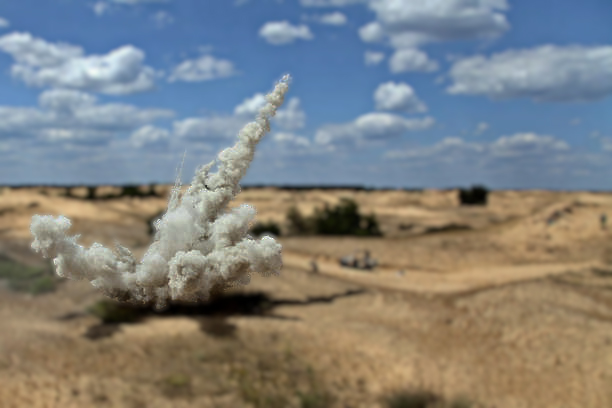
Detect, Observe, and Engage
UAV technology for short- and medium-range missions, especially at low and medium altitudes.
Through the consistent use of AI, our UAVs can carry out tasks largely autonomously, effectively supporting military units without requiring users to have special UAV expertise.
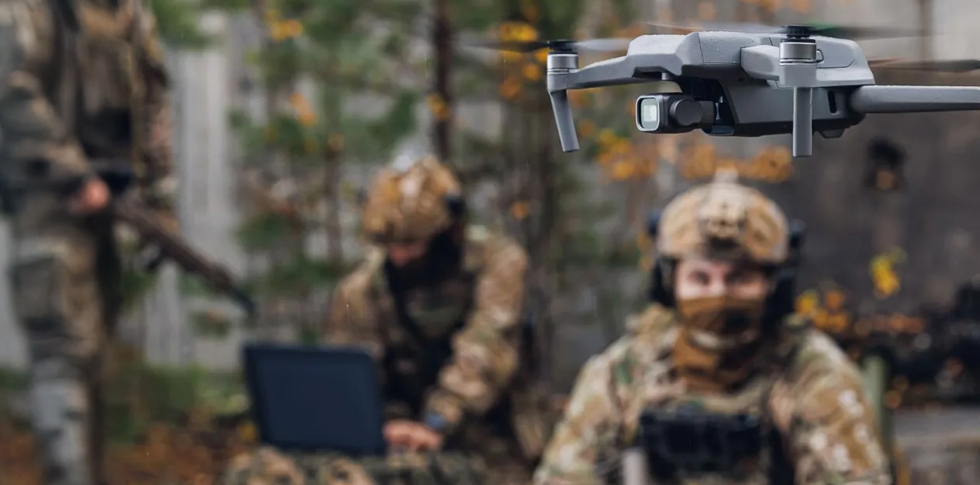
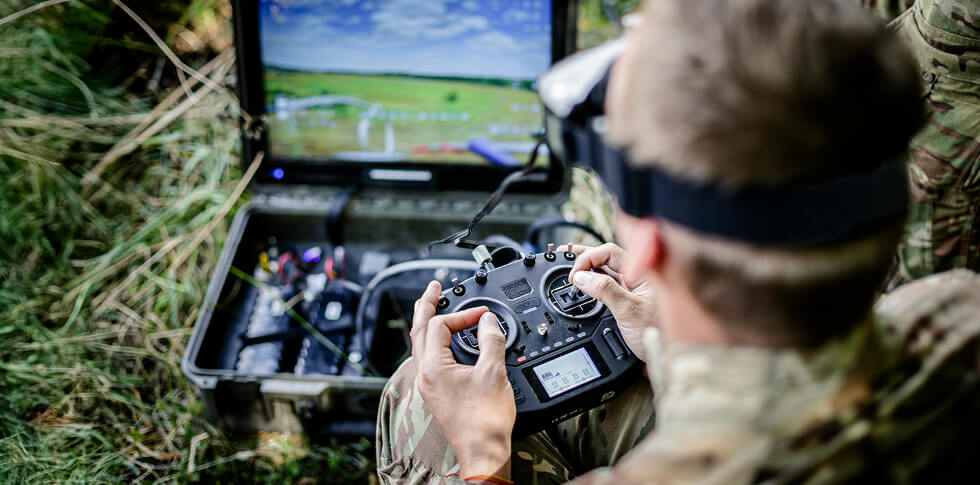
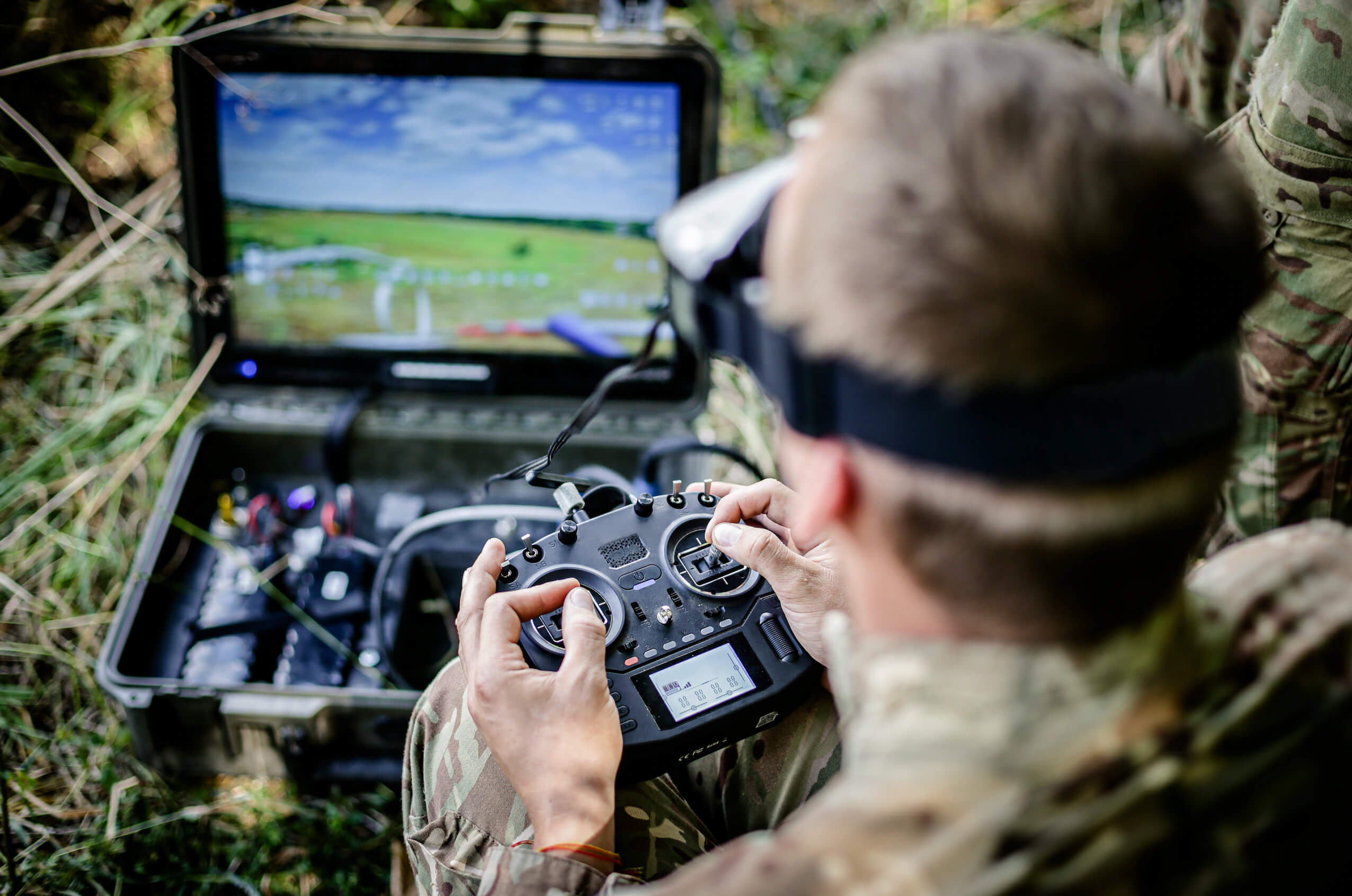
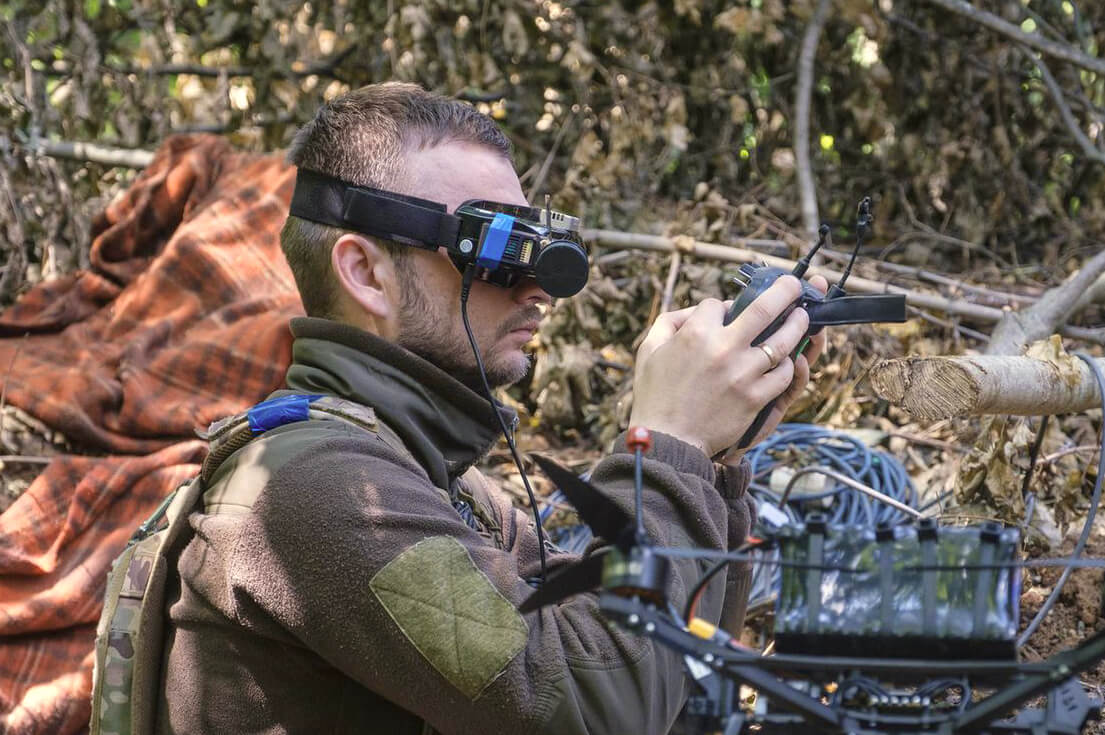
In addition to simple line-of-sight control (limited to close range), UAVs can be operated in FPV mode but are primarily capable of autonomously locating targets. After confirmation by a UAV controller, they can engage individually or as a swarm with autonomous collective control.
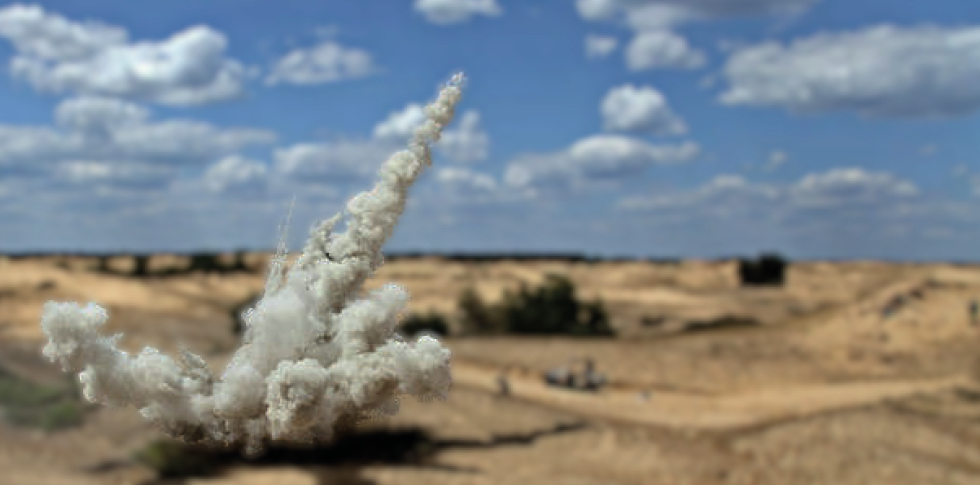
These special low-budget micro and mini UAVs are designed as single-use combat systems, requiring them to be produced quickly, in sufficient quantities, and at consistently reduced costs. We achieve this through precise, targeted technical design regarding materials, equipment, and functionality.
-
 AI Swarm Technology
-
 FPV Control
-
 Modular Imaging
-
Intelligent AI-Based Command Software
-
 Autonomous Mission Execution
Search and Monitor
Detect, Observe, and Track
UAV technology for short- and medium-range missions, especially at low and medium altitudes, also in combination with a MaTCS (Mobile all Terrain Carrier System).
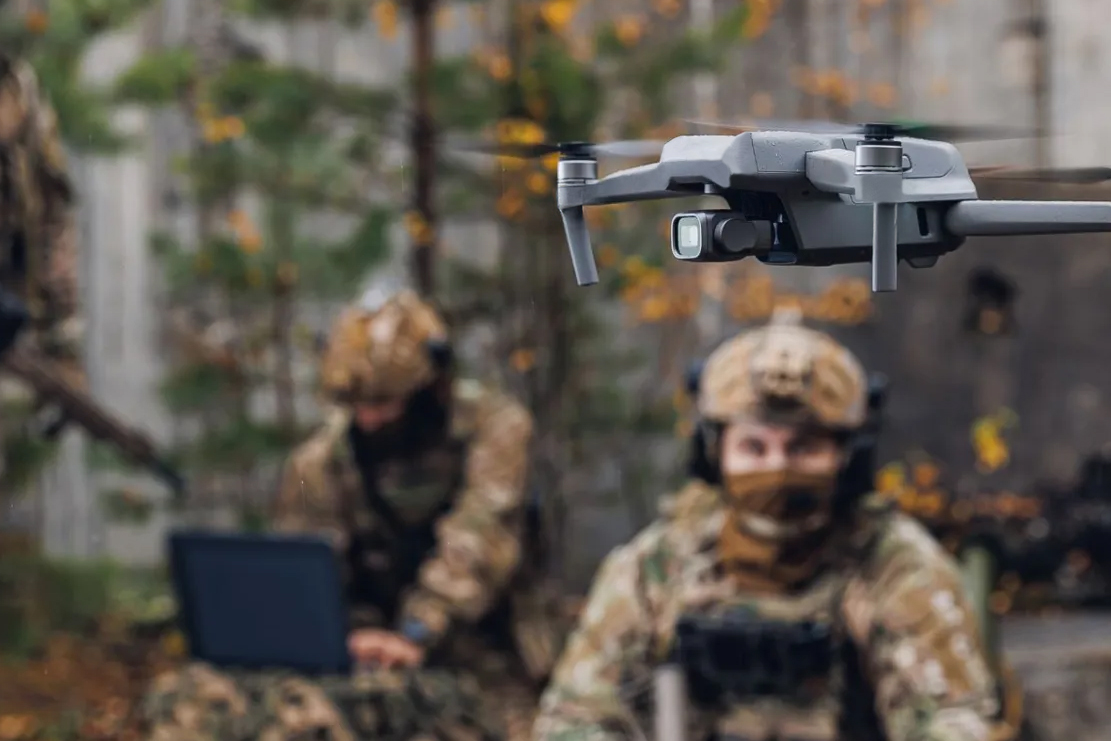
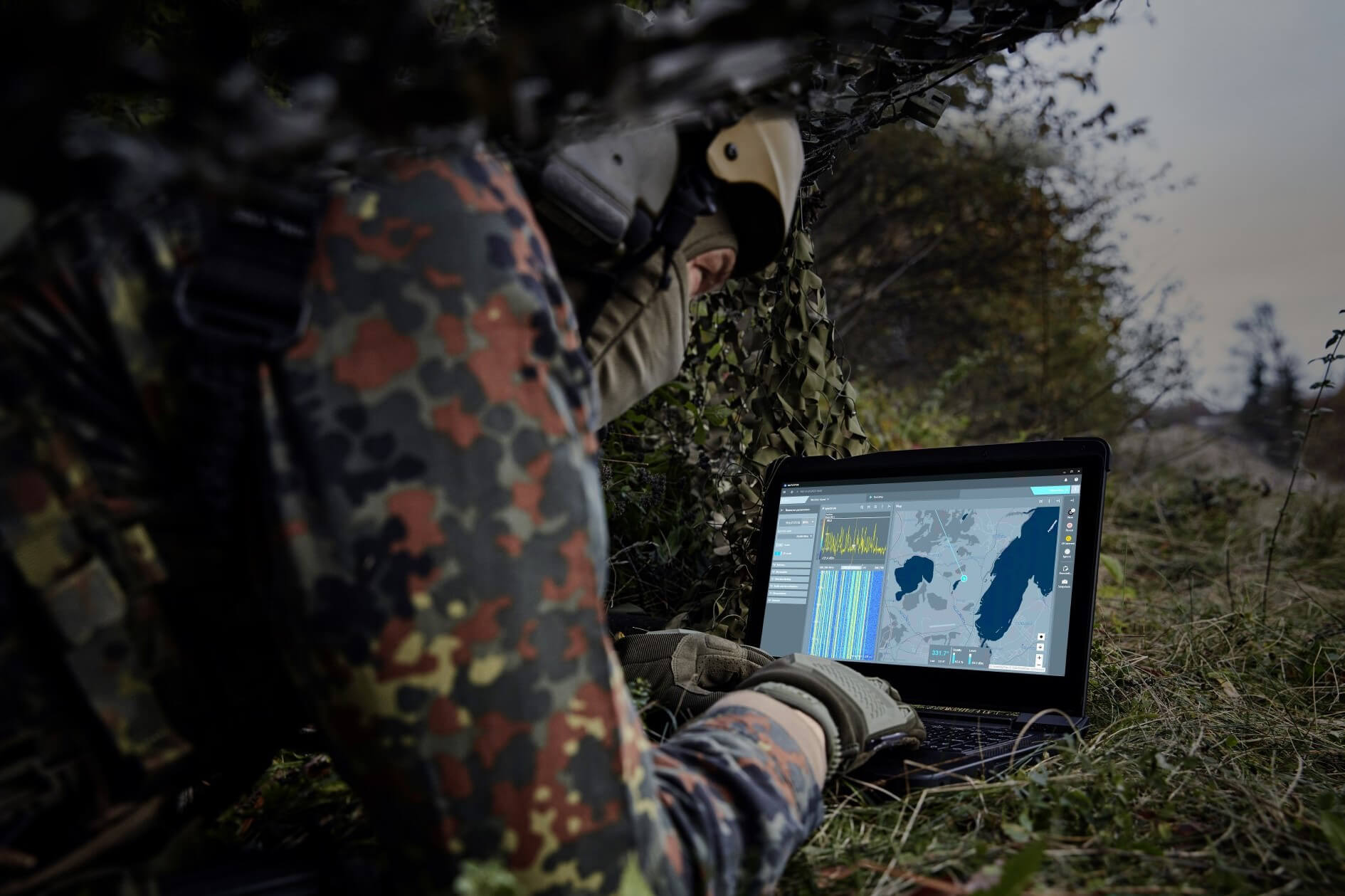
Whether as personal equipment for soldiers in close-range reconnaissance or for comprehensive battlefield monitoring, these AI-assisted micro and mini UAVs can execute tasks largely autonomously, providing effective protection and support. Importantly, users (UAV controllers) can deploy them quickly and effectively without needing special UAV knowledge.
The UAVs can autonomously detect potential targets, observe and track them, and transmit evaluations in real-time. They are divided into the following groups:
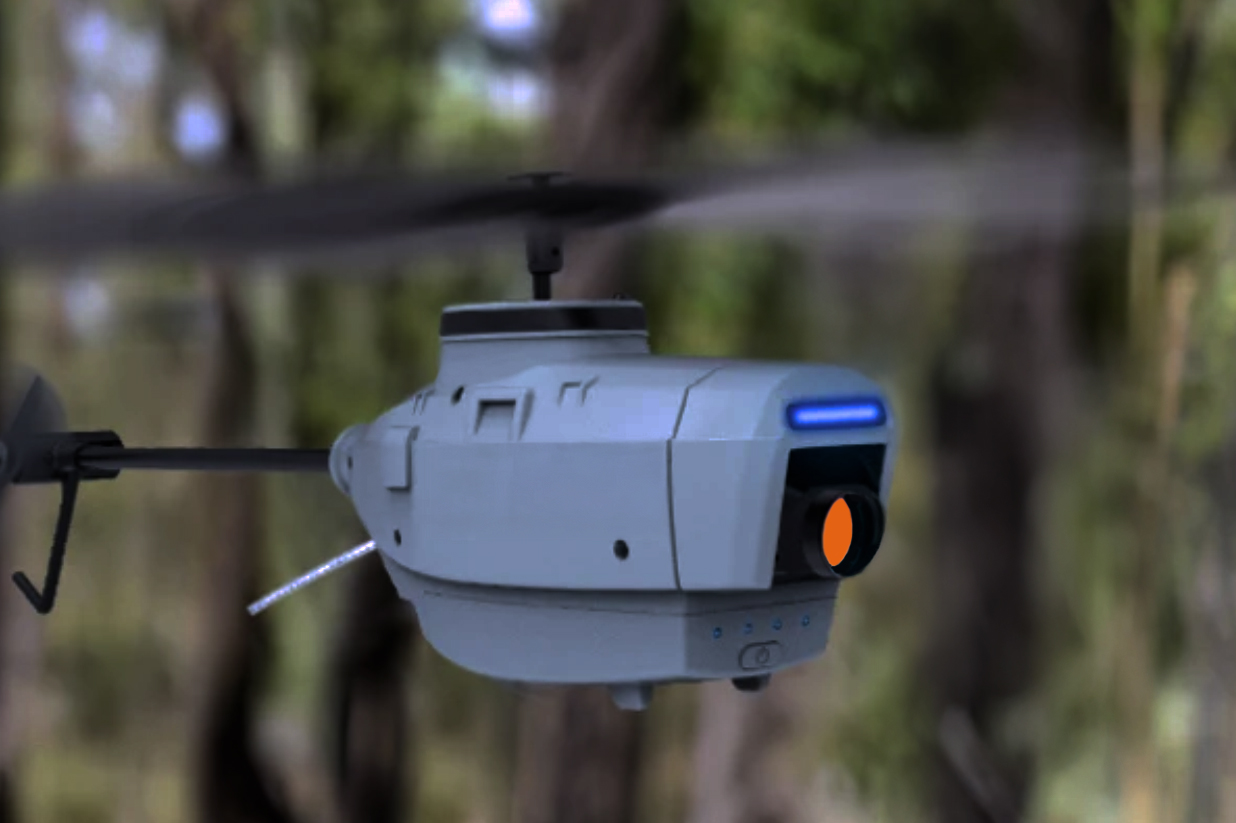
1. LB-UAV:
Specially developed as an easy-to-use single-operator micro UAV, serving as personal reconnaissance equipment in direct combat, effectively supporting and protecting soldiers with adapted AI functionality. FPV-capable UAVs are simple to control and can be operated by anyone after a short time. They are cost-efficient, allowing immediate replacement in case of loss and availability in required quantities.
2. HP-UAV:
Technically advanced yet cost-effective high-performance UAVs with comprehensive AI support for autonomous mission execution. Designed for battlefield reconnaissance and equipped with extensive sensors.
The onboard AI enables largely autonomous data collection and analysis, reducing user workload. Users can focus on tasks without requiring special UAV training.
3. MaTCS:
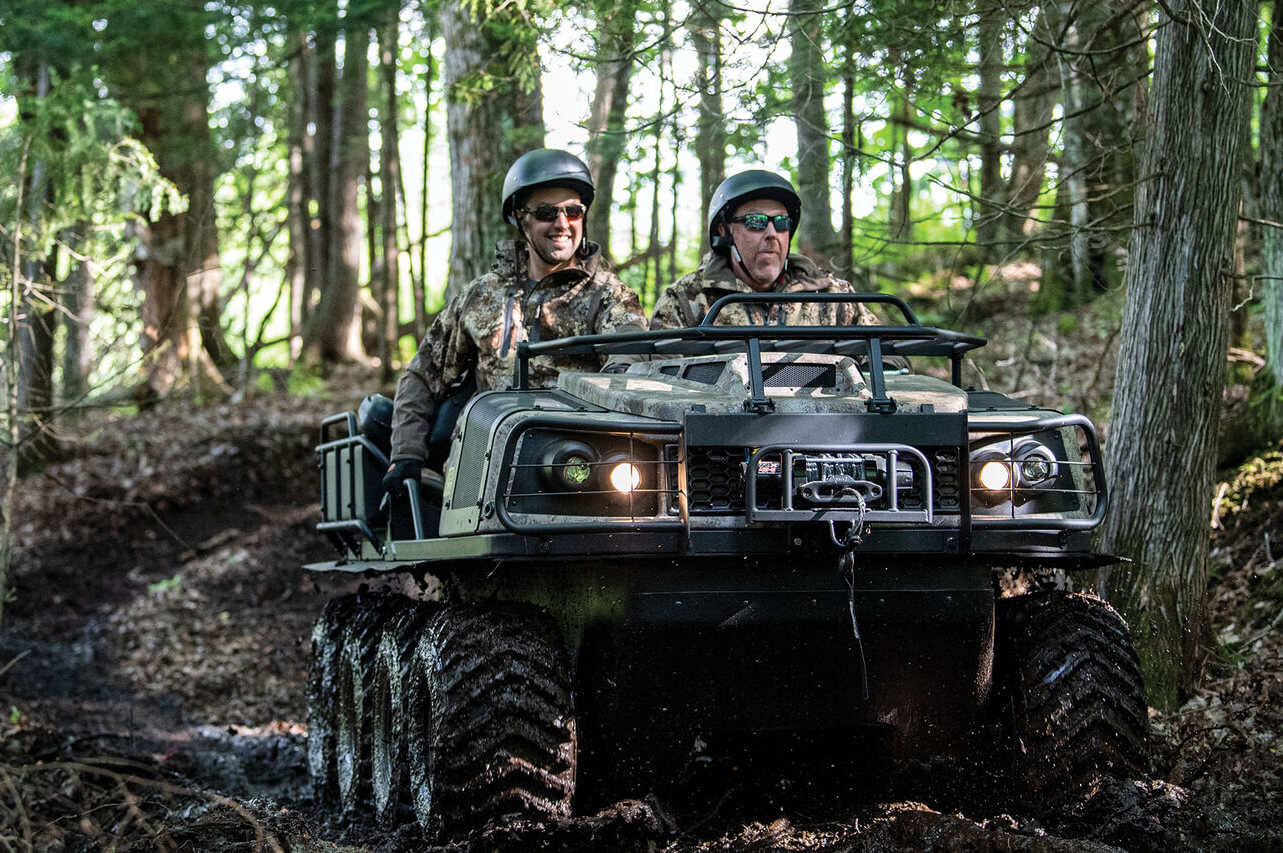
The mobile all-terrain carrier system is an amphibious, flexible small vehicle that serves as a carrier for an autonomous UAV dock station, enabling rapid and terrain-independent deployment. This extends reconnaissance areas and allows quick relocation out of danger zones. Unlike stationary systems, the MaTCS remains mobile during missions, always linked to its UAV, which can return automatically to its current location.
The MaTCS is amphibious and can adapt to rough terrain by switching between wheels and tracks. With the dock station, it accommodates two operators.
-
FPV Control
-
AI Detection
-
 Thermal Imaging
-
 Night Vision Technology
-
 Multi-Camera Technology
-
 Laser Rangefinding and Target Marking
-
Intelligent AI-Based Command Software
-
Autonomous Mission Execution
-
AI Self-Defense Systems
-
 Autonomous and Mobile Docking Station
Search and Rescue
Search and Rescue
UAV technology for medium-range missions, particularly at low and medium altitudes, also in combination with MaTCS.
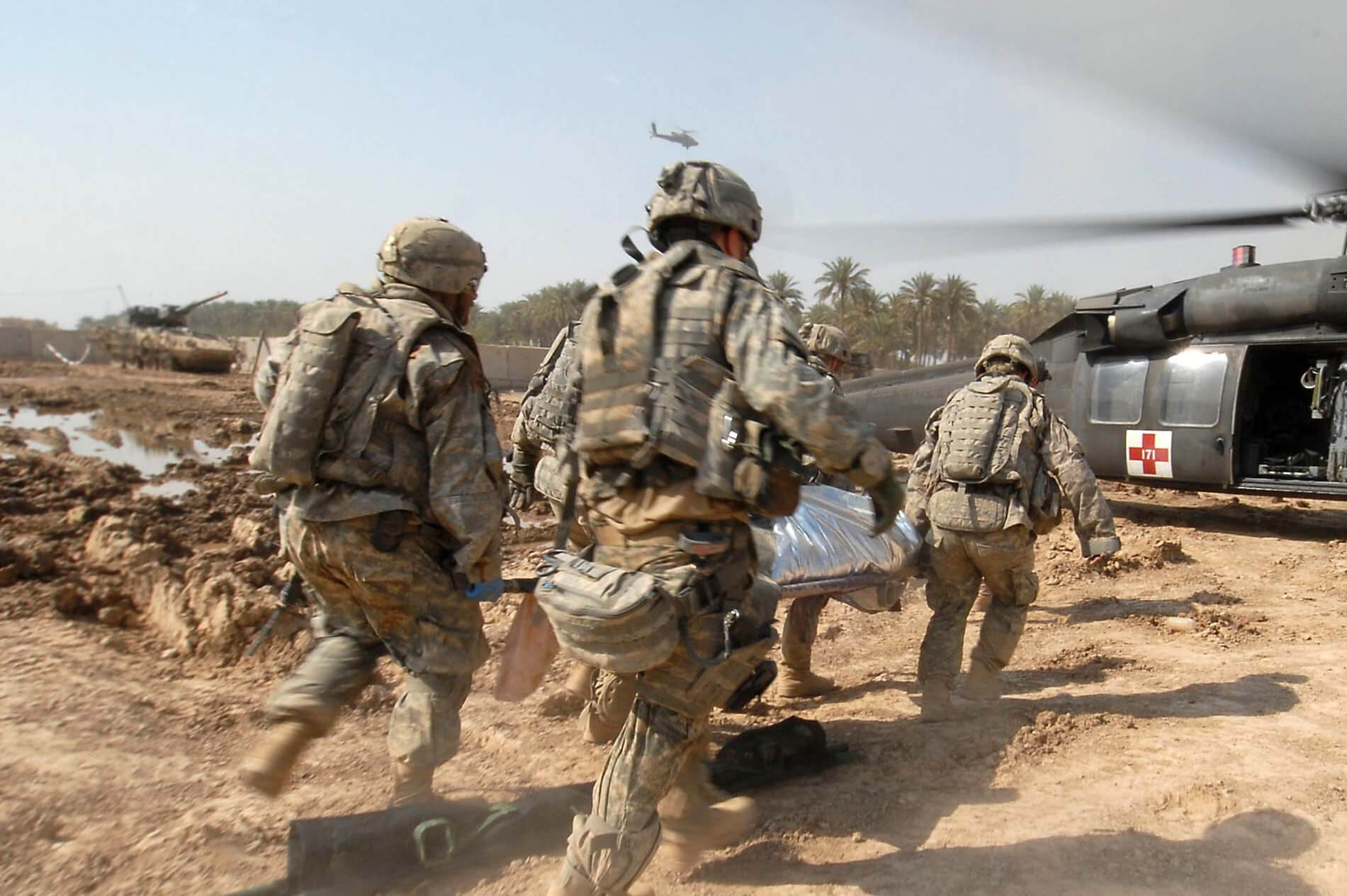
Whether as personal equipment for soldiers in close-range reconnaissance or for large-scale battlefield surveillance, these AI-assisted UAVs can also be deployed effectively in rescue operations, quickly locating missing, injured, or distressed persons, even in large search areas. Thus, they are suitable not only for military but also for civil emergency and disaster relief operations.
Importantly, UAVs can be easily operated and deployed by users without requiring special knowledge. The UAVs are divided into the following groups:
1. LB-UAV:
Single-operator micro UAVs originally designed for monitoring can also be used directly for rescue missions, allowing individual soldiers to visually search nearby areas for missing or injured comrades and direct rescue forces without putting themselves at risk.
2. HP-UAV:
These UAVs, designed for wide-area reconnaissance and equipped with extensive sensor systems, can autonomously search predefined areas for missing or injured persons. Their AI enables largely independent data collection and evaluation, significantly reducing user workload. This makes them the most effective means for rapidly locating and rescuing persons in need.
3. MaTCS:
Especially in rescue operations, combining the mobile all-terrain carrier system with a high-performance UAV provides major advantages for quickly checking large areas and enabling direct rescue and recovery operations. Since the MaTCS can relocate even while the UAV is still searching, it can follow the UAV directly, ensuring immediate response without delay once persons in need are detected.
The MaTCS can be equipped and adapted to specific rescue mission requirements.
-
AI Detection
-
Thermal Imaging
-
Night Vision Technology
-
Multi-Camera Technology
-
Laser Rangefinding and Target Marking
-
Intelligent AI-Based Command Software
-
Autonomous Mission Execution
-
AI Self-Defense Systems
-
Autonomous and Mobile Docking Station
-
 Civil Protection & Emergency Use
Inquiry
to: DEFENCE-Technology
I am interested in your UAV technology. Please provide me with further information regarding the following areas: